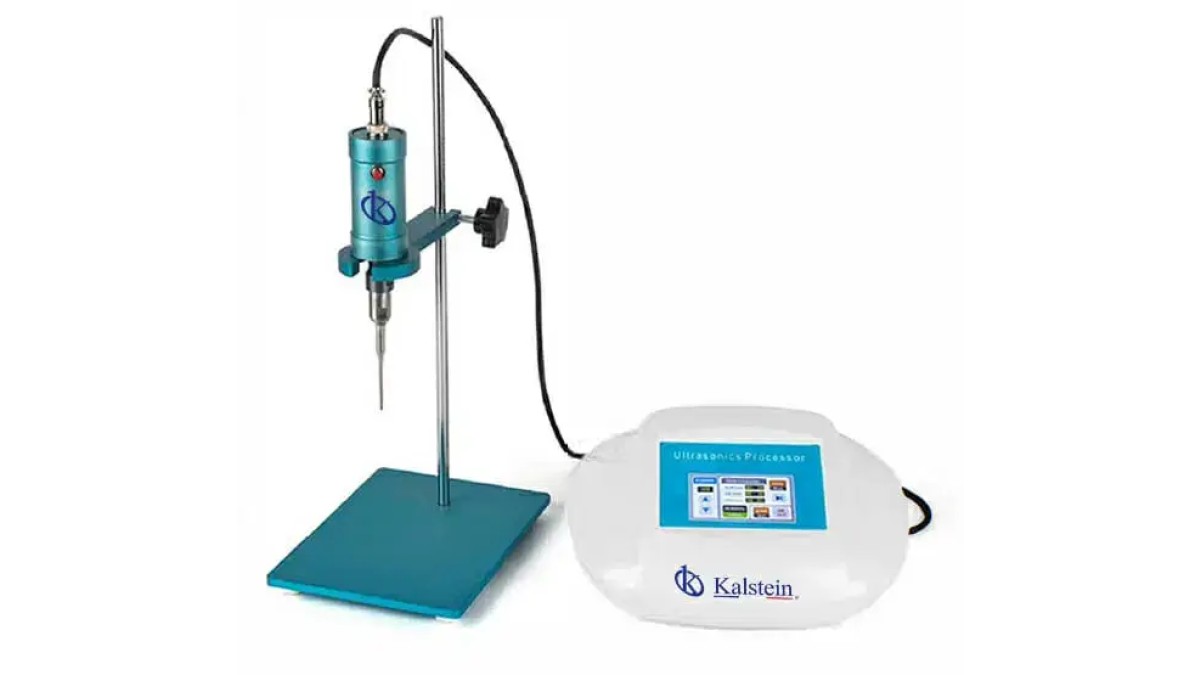
Ultrasonic Homogenizers: Applications in Research, Biotechnology, and Academia 2026
What is it used for in 2026
Ultrasonic homogenizers are vital tools in laboratories, especially in research, biotechnology, and academic settings. They utilize ultrasonic waves to create cavitation effects in liquids, enabling processes such as emulsification, homogenization, extraction, and cell disruption. In 2026, these devices are employed for a range of applications including:
- Cell Disruption: Effectively breaking down plant and animal cells for the release of cellular components.
- Emulsification: Creating stable emulsions, which are crucial in pharmaceuticals and food products.
- Nanoparticle Dispersion: Preparing nanoparticles for drug delivery systems and advanced materials.
- Homogenization: Ensuring uniformity in mixtures, particularly in the food and cosmetic industries.
History and evolution of the technology
The use of ultrasonic technology dates back to the early 20th century, initially focused on underwater sonar applications. As the technology evolved, researchers began to explore its potential in liquid processing. By the 1970s, ultrasonic homogenizers were developed for laboratory use, allowing scientists to harness cavitation effects effectively. Over the decades, advancements in digital controls, transducer technology, and application-specific probes have enhanced the capabilities of ultrasonic homogenizers, making them essential in various fields such as biotechnology, pharmaceuticals, and materials science.
How to use it step by step
Using an ultrasonic homogenizer involves several critical steps:
- Preparation of Samples: Ensure your samples are properly prepared in a suitable container.
- Setup the Ultrasonic Homogenizer: Connect the device to a power source, and attach the appropriate probe for your application.
- Adjust Settings: Configure the ultrasonic power, frequency, and duration based on the specific process requirements.
- Process the Samples: Immerse the probe into the sample and start the homogenization process, monitoring as needed.
- Post-Processing: After treatment, collect the samples and conduct any necessary analyses to evaluate the results.
Best techniques and protocols
To achieve optimal results with ultrasonic homogenizers, adhere to the following best practices:
- Calibration: Regularly calibrate the device to ensure accurate power output and reproducibility.
- Cooling: Manage heat generation by using cooling systems or pulsing the ultrasonic waves to avoid sample degradation.
- Optimization: Experiment with different powers, frequencies, and durations to find the optimal settings for your specific application.
- Safety Precautions: Always use personal protective equipment and follow safety guidelines when operating ultrasonic equipment.
Practical applications by laboratory type
Ultrasonic homogenizers find applications across various types of laboratories:
- Biotechnology Labs: Used for cell lysis, extraction of biomolecules, and preparation of samples for analysis.
- Pharmaceutical Labs: Employed in drug formulation, quality control, and stability testing.
- Food Science Labs: Utilized for emulsification processes in food products and beverages.
- Academic Research Labs: Used for diverse applications including educational demonstrations and basic research.
Regulations, standards and certifications
Laboratories utilizing ultrasonic homogenizers must comply with various regulations and standards, such as:
- ISO 9001: Quality management systems ensuring product quality and reliability.
- GLP (Good Laboratory Practice): Standardized guidelines for conducting research and testing.
- CE Certification: Required for equipment used in laboratories in Europe, confirming compliance with safety and health standards.
Comparison with alternative technologies
When comparing ultrasonic homogenizers with alternative technologies, such as mechanical homogenizers and bead mills, several factors come into play:
- Efficacy: Ultrasonic homogenizers provide higher efficiency in cell disruption and emulsification.
- Scalability: They are easily scalable from small lab samples to larger processes.
- Sample Integrity: Ultrasonic processing is generally gentler on samples compared to mechanical methods, reducing heat exposure.
Comparison of available models
| Model | Best for | Key specs | Recommended use case |
|---|---|---|---|
| YR05829 | Liquid processing and emulsification | Power: 5-150W, Frequency: 19-25KHz, Capacity: 0.1-50ml | Best for small sample homogenization tasks in research labs. |
| YR05830 | Cell disruption for biological samples | Power: 5-250W, Frequency: 19-25KHz, Capacity: 0.5-100ml | Ideal for processing larger biological samples efficiently. |
| YR05831 | High throughput applications | Power: 5-400W, Frequency: 19-25KHz, Capacity: 0.5-300ml | Suitable for laboratories with high-volume processing needs. |
| YR05831-op1 | Budget-friendly applications | Power: 5-150W, Frequency: 19-25KHz, Capacity: 0.1-50ml | Best for educational institutions with limited budgets. |
| YR05831-op2 | Cost-effective solutions | Power: 5-150W, Frequency: 19-25KHz, Capacity: 0.1-50ml | Ideal for small-scale applications in research. |
| YR05832 | Advanced nanoparticle dispersion | Power: 650W, Frequency: 20-25KHz, Capacity: 0.2-500ml | Best for cutting-edge research in nanotechnology. |
Common mistakes and how to avoid them
When using ultrasonic homogenizers, laboratories often encounter several common pitfalls:
- Incorrect Sample Volume: Always ensure the sample volume is appropriate for the probe size to avoid ineffective processing.
- Inadequate Cooling: Monitor heat generation and incorporate cooling methods to prevent sample degradation.
- Neglecting Calibration: Regularly calibrate the device to ensure consistent results and reliability.
- Improper Settings: Always optimize settings according to the specific material and desired outcome.
Maintenance, calibration and good practices 2026
To maintain ultrasonic homogenizers in optimal condition, consider the following practices:
- Regular Calibration: Establish a calibration schedule to ensure accuracy in measurements.
- Routine Cleaning: Clean probes and components after each use to prevent contamination.
- Inspection: Frequently check for wear and tear on parts and replace them as necessary.
- Documentation: Keep detailed records of maintenance activities and device performance for future reference.
Cost-benefit analysis 2026
When evaluating the cost-benefit of ultrasonic homogenizers, consider the following factors:
- Initial Investment: While the initial cost may be high, the efficiency and versatility often justify the expense.
- Operational Costs: Lower energy consumption and reduced need for additional equipment can lead to savings over time.
- Time Savings: Faster processing times can lead to increased productivity in laboratory workflows.
Frequently asked questions
What is the ideal ultrasonic homogenizer for small labs?
The YR05829 model is ideal for small labs due to its compact size and affordability, making it suitable for basic homogenization needs.
How can I ensure consistent results with my ultrasonic homogenizer?
To ensure consistent results, regularly calibrate your device, optimize settings for each specific application, and maintain meticulous records of all procedures and results.
What are the safety measures to consider when using ultrasonic homogenizers?
Always wear appropriate personal protective equipment, ensure the workspace is free of hazards, and follow the manufacturer’s safety guidelines during operation.
Can I use ultrasonic homogenizers for different types of samples?
Yes, ultrasonic homogenizers can be used for a wide variety of samples, including biological tissues, emulsions, and nanoparticle dispersions, making them highly versatile laboratory tools.
How often should I perform maintenance on my ultrasonic homogenizer?
Routine maintenance should be performed after every use, with more thorough inspections and calibrations scheduled monthly or quarterly, depending on usage frequency.
What are the key factors to consider when selecting an ultrasonic homogenizer?
Consider factors such as power output, capacity, frequency range, and specific applications required to find a model that best suits your laboratory’s needs.
If you are looking for a fusion of innovation and quality, you have come to the right place. At Kalstein, we offer you the luxury of exploring our exclusive catalog of laboratory equipment. We manufacture every device to the highest standards of excellence. Our intuitive and seamless online purchasing channels are designed for your convenience, securing the most competitive prices. Hesitate no longer — we bring science to life, it is time to become part of our community.