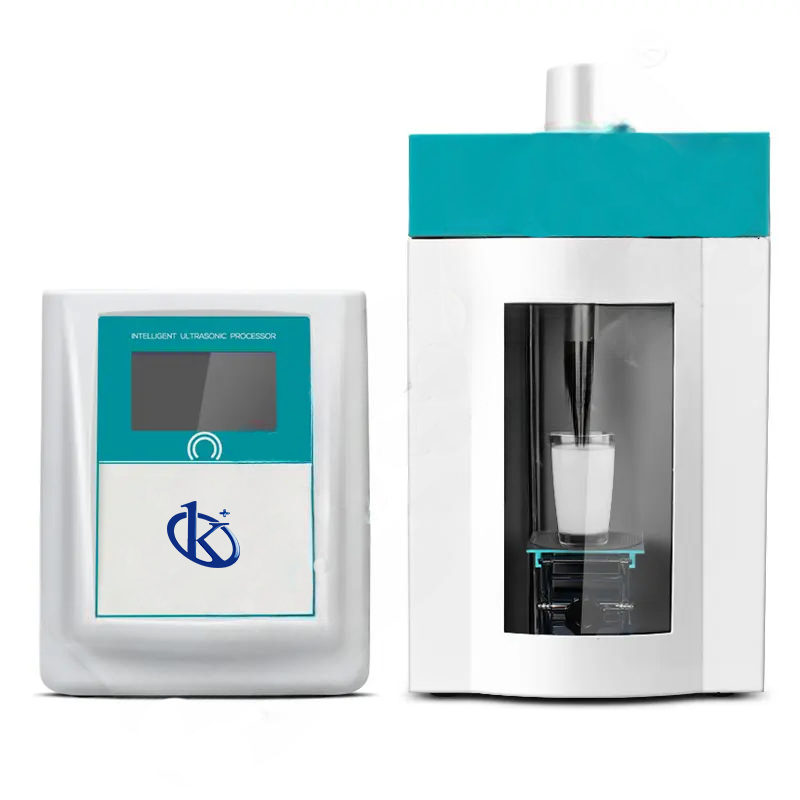
Ultrasonic Homogenizers: A Comparative Look at Industry Technologies
Ultrasonic homogenizers have become crucial in laboratory settings for their effectiveness in sample preparation, emulsification, and cell disruption across various scientific fields. This detailed article will delve into the comparative landscape of ultrasonic homogenizers, focusing on their specific applications, advantages over alternative technologies, and how they cater to the evolving needs of laboratory professionals.
Understanding Ultrasonic Homogenizers
Ultrasonic homogenizers utilize high-frequency sound waves to agitate and disrupt particles in a liquid medium, leading to effective homogenization. Their key applications include emulsifying, dispersing, and homogenizing samples, making them valuable in fields such as biology, chemistry, and material science. The technology is particularly effective for difficult samples that require consistent and thorough processing.
Comparison of Available Models
| Model | Power (W) | Mixing Capacity (ml) | Price (USD) | Best For |
|---|---|---|---|---|
| YR05015 | 1.5 - 150 | 0.1 - 150 | 756.00 | Small sample sizes |
| YR05016 | 2-5 - 250 | 0.1 - 300 | 882.00 | Medium sample capacity |
| YR05017 | 10 - 650 | 0.1 - 500 | 1050.00 | Versatile applications |
| YR05018 | 10 - 900 | 0.1 - 600 | 1281.00 | High consistency needs |
| YR05019 | 20 - 1200 | 1 - 1000 | 1785.00 | Large batch processing |
| YR05020 | 50 - 1800 | 1 - 1200 | 2058.00 | Extensive laboratory applications |
Comparison Against Alternative Technologies
When evaluating ultrasonic homogenizers, it is essential to compare them with alternative homogenization techniques, such as high-pressure homogenization, mechanical mixing, and bead milling. Each technique has unique advantages and limitations:
- High-Pressure Homogenizers: Excellent for high viscosity samples but require more maintenance and capital investment.
- Mechanical Mixing: Simple and cost-effective but less effective for emulsification and particle size reduction.
- Bead Mills: Effective for grinding and dispersing, but they can introduce contaminants and require extensive cleanup.
Ultrasonic homogenizers, such as the YR05019, offer a balanced approach, providing effective results while maintaining flexibility and ease of use.
Common Mistakes and How to Avoid Them
Laboratory professionals often encounter pitfalls when utilizing ultrasonic homogenizers. Common mistakes include:
- Inadequate sample preparation: Ensure samples are appropriately diluted and free from particulates.
- Improper settings: Always refer to the manufacturer's guidelines to set parameters such as power and time accurately.
- Neglecting maintenance: Regular cleaning and calibration are crucial to maintain performance and accuracy.
For instance, using the YR05017 model requires adhering to specified homogeneity levels to ensure reproducibility.
Cost-Benefit Analysis of Ultrasonic Homogenizers
A fundamental aspect for laboratories considering ultrasonic homogenizers is understanding the cost-benefit ratio. Below is a sample analysis of operating costs, initial investment, and ROI for different models:
| Model | Initial Investment (USD) | Annual Operating Cost (USD) | Estimated ROI (Months) |
|---|---|---|---|
| YR05015 | 756 | 100 | 12 |
| YR05016 | 882 | 120 | 14 |
| YR05017 | 1050 | 150 | 16 |
| YR05018 | 1281 | 175 | 18 |
| YR05019 | 1785 | 200 | 20 |
| YR05020 | 2058 | 250 | 22 |
This analysis demonstrates that investing in an ultrasonic homogenizer yields considerable returns, particularly for high-demand applications.
Best Practices for Using Ultrasonic Homogenizers
To achieve optimal results with ultrasonic homogenizers, practitioners should follow best practices, including:
- Calibrate regularly: Ensure the device maintains its performance standards by following a strict calibration schedule.
- Use compatible sonicators: Select the right sonicator probe diameter based on the sample volume to optimize efficiency.
- Monitor temperature: Excessive heat can affect the sample quality; therefore, incorporate cooling methods where necessary.
Utilizing the YR05020 model, for instance, provides high efficiency at large volumes while adhering to these best practices ensures consistent output.
Frequently Asked Questions
What are the main advantages of using ultrasonic homogenizers over high-pressure methods?
Ultrasonic homogenizers, such as the YR05016, provide efficient emulsification and homogenization with less maintenance compared to high-pressure homogenizers, which require frequent servicing and have higher operating costs.
How do ultrasonic homogenizers help in achieving ISO 17025 compliance?
Using models like the YR05019 ensures standardized processes and documentation, crucial for ISO 17025 compliance, particularly in sample preparation and reproducibility.
Which ultrasonic homogenizer is best for small sample sizes in labs?
The YR05015 is optimized for small sample sizes, making it an ideal choice for laboratories with limited quantities or requiring precise control over sample processing.
How can ultrasonic homogenizers improve throughput in laboratory operations?
Ultrasonic homogenizers, like the YR05020, can process multiple samples quickly due to their high power settings and efficient mixing capabilities, significantly enhancing laboratory throughput.
What maintenance practices are essential for ultrasonic homogenizers?
Regular cleaning, calibration, and checking for wear on probes are essential maintenance practices for ultrasonic homogenizers like the YR05018 to ensure longevity and consistent performance.
How do I select the right ultrasonic homogenizer for my application needs?
When selecting an ultrasonic homogenizer, consider factors such as power requirements, sample volume, and specific application needs; for instance, the YR05017 is versatile for various applications.
Why is the power range crucial when choosing an ultrasonic homogenizer?
The power range is crucial as it affects the homogenization efficiency; models like the YR05019 offer higher power for more demanding applications, ensuring effective processing.
What is the estimated lifespan of ultrasonic homogenizers in a laboratory setting?
With proper care and routine maintenance, ultrasonic homogenizers such as the YR05016 can last several years, making them a sound investment for laboratory operations.
If you are looking for a fusion of innovation and quality, you have come to the right place. At Kalstein, we offer you the luxury of exploring our exclusive catalog of laboratory equipment. We manufacture every device to the highest standards of excellence. Our intuitive and seamless online purchasing channels are designed for your convenience, securing the most competitive prices. Hesitate no longer — we bring science to life, it is time to become part of our community.