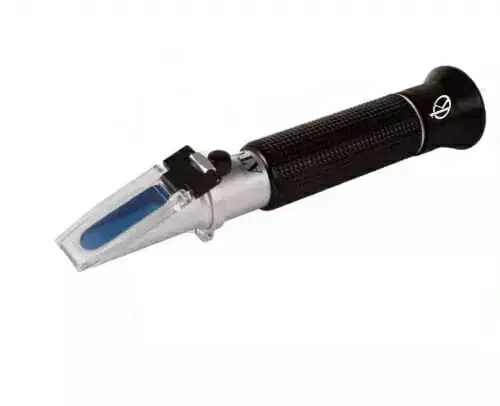
Achieving ROI and Cost-Benefit Analysis with Salinity Refractometers
The use of salinity refractometers in laboratories plays a crucial role in ensuring quality control in various applications, particularly in marine and clinical research. As laboratories seek to optimize their operations and minimize costs, understanding the return on investment (ROI) and conducting a thorough cost-benefit analysis becomes essential. This article explores various models of salinity refractometers, examining their capabilities within the context of ROI and cost-effectiveness.
Understanding the Importance of ROI and Cost-Benefit Analysis
ROI is a key metric in the evaluation of any laboratory equipment acquisition. For salinity refractometers, evaluating their cost against the potential benefits can help laboratories make informed decisions. By measuring the efficiency, accuracy, and overall contribution of these tools to laboratory operations, professionals can ascertain whether the investment is justified.
Comparison of Available Models
| Model | Measurement Range | Price (USD) | Key Features |
|---|---|---|---|
| YR05887 | 2-4% (20-40 ppt), Specific Gravity: 1.015-1.030 | 9.50 | Designed for seawater and brine concentration testing. |
| YR05888 | 0-4% (0-40 ppt), Specific Gravity: 1.000-1.030 | 9.50 | Suitable for various salinity levels with a direct reading scale. |
| YR05913 | 2-4% (20-40 ppt), Specific Gravity: 1.015-1.030 | 9.50 | Efficient for marine quality control and research. |
| YR05914 | 0-4% (0-40 ppt), Specific Gravity: 1.000-1.030 | 9.50 | Versatile for both laboratory and field use. |
Evaluating the Financial Impact of Salinity Refractometers
When analyzing the financial impact of salinity refractometers, it is essential to consider both initial capital expenditure (CAPEX) and ongoing operational expenses (OPEX). The acquisition of models like YR05887, with a price point of $9.50, represents a minor investment compared to potential productivity gains and quality assurance in laboratory settings.
CAPEX versus OPEX
Laboratories often face the dilemma of CAPEX versus OPEX in budgeting for new equipment. In the case of salinity refractometers, the low initial cost allows for quick adoption without significant financial strain. Maintaining efficiency and accuracy in measurements can potentially reduce costs associated with re-testing and improve sample throughput.
Cost-Effectiveness of Salinity Refractometers in Different Scenarios
Using the YR05888 model, laboratories can effectively monitor salinity levels in various applications ranging from aquaculture to clinical diagnostics. This model enables laboratories to maintain precise control over their processes, ultimately contributing to long-term savings.
Common Mistakes and How to Avoid Them
When investing in salinity refractometers, common mistakes include underestimating the importance of quality control and overreliance on inaccurate measurement tools. Ensuring that the selected model aligns with specific laboratory needs is key to avoiding financial losses. Regularly calibrating the selected refractometer, such as the YR05913, helps maintain accuracy and minimizes costly errors related to salinity measurements.
Quantifying the Benefits of Salinity Refractometers
Quantifying the benefits of salinity refractometers requires a structured approach to measurement and analysis. By tracking the number of tests performed and the associated costs, laboratories can calculate the cost per test. For instance, with the YR05914 model priced at $9.50, the ability to conduct multiple tests efficiently translates into higher ROI over time.
Frequently Asked Questions
What is the cost per test for the YR05887 salinity refractometer in a laboratory?
The cost per test for the YR05887 salinity refractometer can be calculated by dividing the price of the device, $9.50, by the number of tests conducted over its lifespan. This model is designed for efficient salinity measurements, ensuring that costs remain low.
How can I justify the investment in a salinity refractometer for my lab?
Justifying the investment in a salinity refractometer like the YR05888 involves demonstrating its role in improving accuracy and efficiency in testing. By highlighting the device's ability to prevent re-testing and enhance quality control, you can show a strong ROI potential.
What are the key features to look for in a salinity refractometer?
Key features to look for include measurement range, accuracy, and ease of use. Models like the YR05914 provide a clear direct reading of salinity levels, which is crucial for effective quality control in various applications.
How do salinity refractometers improve laboratory efficiency?
Salinity refractometers, such as the YR05913, improve laboratory efficiency by providing quick and accurate measurements, reducing the time spent on each test and increasing sample throughput.
What maintenance is required for salinity refractometers?
Regular calibration and cleaning are essential for maintaining salinity refractometers like the YR05887. Ensuring that the device is free from contamination and calibrated correctly is vital for accurate readings and prolonging its lifespan.
How does the YR05888 model compare to others on the market?
The YR05888 model offers a competitive price point and reliable performance, making it an excellent choice for laboratories looking to balance cost and quality without compromising accuracy in salinity testing.
Why is cost-benefit analysis important for laboratory equipment purchases?
A thorough cost-benefit analysis, particularly for salinity refractometers, helps laboratories assess potential savings, maximize ROI, and ensure that each piece of equipment contributes effectively to their operational goals.
What factors influence the ROI of salinity refractometers?
Factors influencing ROI include initial purchase cost, accuracy and reliability of results, time savings in testing, and the overall impact on laboratory throughput. Models like the YR05914 can significantly enhance operational efficiency.
If you are looking for a fusion of innovation and quality, you have come to the right place. At Kalstein, we offer you the luxury of exploring our exclusive catalog of laboratory equipment. We manufacture every device to the highest standards of excellence. Our intuitive and seamless online purchasing channels are designed for your convenience, securing the most competitive prices. Hesitate no longer — we bring science to life, it is time to become part of our community.