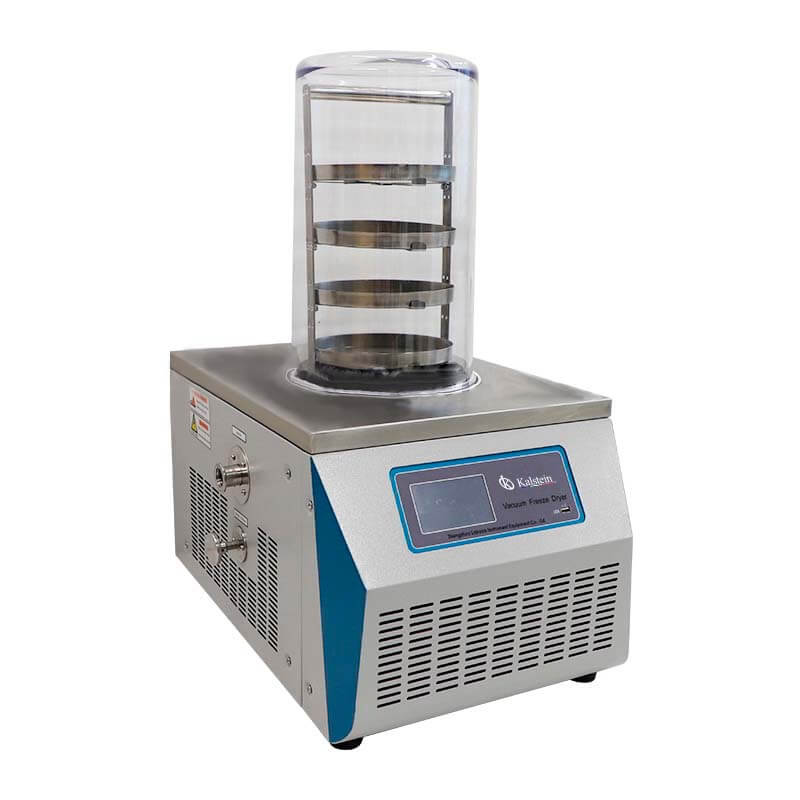
What is the ROI and cost-benefit analysis for benchtop laboratory freeze dryers?
In laboratory settings, freeze dryers are essential for preserving biological materials, pharmaceuticals, and food products. Understanding the return on investment (ROI) and performing a cost-benefit analysis of these benchtop laboratory freeze dryers can greatly impact operational efficiency and budget management. This article will explore the financial aspects of investing in these machines, comparing multiple models and providing insights on maximizing their value.
Understanding ROI in Laboratory Freeze Dryers
Determining the ROI of benchtop laboratory freeze dryers involves assessing both the capital expenses (CAPEX) and operational expenses (OPEX) associated with these machines. CAPEX includes the initial purchase price while OPEX refers to ongoing costs such as maintenance, energy consumption, and consumables. Calculating the ROI allows laboratories to evaluate the financial viability of their investment over time.
Cost-Benefit Analysis of Freeze Dryers
A cost-benefit analysis evaluates the costs versus the benefits gained from using a freeze dryer. For instance, after freeze-drying, materials can be preserved for long periods without degradation, which translates to significant savings in waste and reprocessing. The benefits often outweigh the costs when considering efficiency improvements and long-term storage capabilities.
Comparison of Available Models
| Model | CAPEX (USD) | Cost per test | Payback Period (months) | Recommended Scenario |
|---|---|---|---|---|
| YR05186 | 1780.00 | Calculated based on usage | 12 | Medium-sized labs with moderate throughput |
| YR05187 | 1943.00 | Calculated based on usage | 15 | Labs requiring higher precision in freeze-drying |
| YR05188 | 2433.00 | Calculated based on usage | 14 | Research labs with high volume samples |
| YR05189 | 2596.00 | Calculated based on usage | 18 | Labs focusing on complex formulations |
| YR05189-1 | 2433.00 | Calculated based on usage | 16 | Ideal for specialized freeze-drying needs |
Common Mistakes and How to Avoid Them
One of the most common mistakes when investing in benchtop laboratory freeze dryers is underestimating operational costs. Laboratories often focus solely on the CAPEX, neglecting to account for consumables and energy costs, which can significantly impact the overall ROI. It is crucial to conduct a comprehensive analysis that includes all potential expenses for a more accurate financial forecast.
Frequently Asked Questions
What are the average operating costs for benchtop laboratory freeze dryers like the YR05186?
The average operating costs for benchtop laboratory freeze dryers can vary depending on usage. For example, the YR05186 normally has an operational expense that includes energy and maintenance costs, which should be calculated to determine a complete picture of overall expenses.
How does the ROI from benchtop freeze dryers like YR05189 compare to traditional methods?
The ROI from benchtop freeze dryers such as YR05189 is often higher than traditional methods due to reduced waste and longer shelf-life of products. This efficiency translates into cost savings that can significantly impact budget management in the long run.
What are the benefits of using a YR05187 freeze dryer in a laboratory?
The YR05187 freeze dryer offers several benefits including enhanced preservation of biological materials and pharmaceuticals. Its capabilities allow for a cost-effective solution by reducing spoilage and the need for repeated testing, contributing to a favorable cost-benefit analysis.
How can laboratories maximize the efficiency of freeze dryers like YR05188?
Laboratories can maximize the efficiency of freeze dryers such as YR05188 by optimizing batch sizes and reducing turnaround times. Implementing a well-planned workflow can significantly enhance the productivity and ROI of the freeze dryer.
What factors should be considered when analyzing the cost of a freeze dryer?
When analyzing the cost of a freeze dryer, factors such as initial purchase price, maintenance costs, energy consumption, and the expected lifespan of the unit should be considered. This holistic view will aid in accurately determining the ROI.
How do the features of YR05189-1 contribute to cost savings?
The features of the YR05189-1 contribute to cost savings by enabling efficient freeze-drying processes that minimize product loss and spoilage. By preserving the integrity of samples, laboratories can achieve long-term savings in inventory management.
What is the typical lifespan of a benchtop laboratory freeze dryer?
The typical lifespan of a benchtop laboratory freeze dryer can range from 10 to 15 years, depending on maintenance and usage. Investing in quality models like the YR05186 can ensure longevity and a better return on investment over time.
How does energy consumption impact the ROI of freeze dryers?
Energy consumption has a significant impact on the ROI of freeze dryers. Models like the YR05187 are designed to be energy efficient, potentially lowering operational costs and improving overall financial performance for laboratories.
If you are looking for a fusion of innovation and quality, you have come to the right place. At Kalstein, we offer you the luxury of exploring our exclusive catalog of laboratory equipment. We manufacture every device to the highest standards of excellence. Our intuitive and seamless online purchasing channels are designed for your convenience, securing the most competitive prices. Hesitate no longer — we bring science to life, it is time to become part of our community.