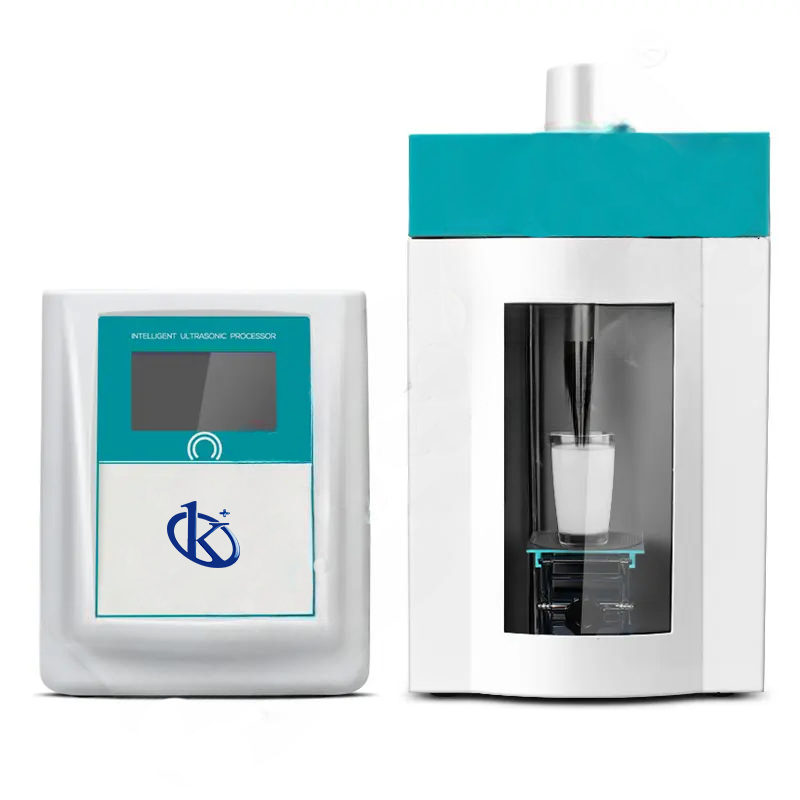
How to Optimize Productivity and Reduce Analysis Times with Ultrasonic Homogenizers?
In modern laboratories, efficiency and speed are paramount. Ultrasonic homogenizers have emerged as essential tools that enhance productivity by significantly reducing analysis times. This article delves into various models of ultrasonic homogenizers, examining their features and capabilities that contribute to optimizing productivity and minimizing analysis durations in laboratory settings.
Understanding Ultrasonic Homogenizers and Their Role in Productivity
Ultrasonic homogenizers utilize high-frequency sound waves to agitate and mix samples, achieving uniformity and breakdown of particles. This technology not only accelerates the homogenization process but also improves the quality of the samples, which is crucial for accurate analysis. The ability to process multiple samples quickly is essential in high-throughput laboratories, where time is a critical factor. Each ultrasonic homogenizer offers unique features that can enhance workflow efficiency and reduce the overall time spent in sample preparation.
Key Features to Look for in Ultrasonic Homogenizers
When selecting an ultrasonic homogenizer, consider features such as power output, temperature control, mixing capacity, and user interface. Models with PID control allow precise adjustments of ultrasonic time and power, enabling high-quality results consistently. Additionally, touchscreen interfaces and data communication options enhance user experience and integration with laboratory information management systems (LIMS), further optimizing workflow.
Comparison of Available Models
| Model | Max Power (W) | Mixing Capacity (ml) | Price (USD) | Best For |
|---|---|---|---|---|
| YR05015 | 150 | 150 | 756.00 | Basic Sample Preparation |
| YR05016 | 250 | 300 | 882.00 | Moderate Throughput |
| YR05017 | 650 | 500 | 1050.00 | High Throughput Applications |
| YR05018 | 900 | 600 | 1281.00 | Complex Sample Forms |
| YR05019 | 1200 | 1000 | 1785.00 | Large Sample Volumes |
| YR05020 | 1800 | 1200 | 2058.00 | Advanced Research Needs |
Maximizing Productivity with Ultrasonic Homogenizers
To maximize productivity with ultrasonic homogenizers, laboratories should implement strategies such as batch processing and optimizing the setup of the equipment. For instance, utilizing models like the YR05019 and YR05020 can handle larger volumes, enabling simultaneous processing of multiple samples, which saves time and enhances throughput. Furthermore, adopting automated systems can reduce operator handling time, allowing for walk-away capabilities during long homogenization cycles.
Common Mistakes and How to Avoid Them
One of the most common mistakes in utilizing ultrasonic homogenizers is improper settings. Users often underestimate the importance of power and time adjustments, leading to suboptimal results. It is crucial to follow the manufacturer's guidelines and conduct preliminary tests with the YR05017 to determine the optimal settings for specific sample types. Regular maintenance and calibration are also essential to prevent equipment malfunction, further enhancing performance and reliability.
Energy Consumption and Sustainability
Energy efficiency is an important consideration in the selection of ultrasonic homogenizers. Models such as YR05020, with high power output, need to be balanced against their energy consumption per run. Laboratories should evaluate the kWh utilized per cycle and consider adopting energy-efficient practices, such as running multiple samples simultaneously. This not only reduces energy costs but also minimizes the environmental footprint associated with laboratory operations.
Frequently Asked Questions
How do ultrasonic homogenizers improve laboratory productivity and analysis times?
Ultrasonic homogenizers, such as the YR05018, significantly improve productivity by enabling rapid sample processing. Their ability to handle larger volumes and provide consistent results reduces the time spent on sample preparation, which ultimately leads to faster analysis times in laboratory workflows.
What is the recommended ultrasonic homogenizer for high-throughput analysis?
The YR05019 is highly recommended for high-throughput analysis due to its 1200W power output and a mixing capacity of up to 1000 ml. This model allows laboratories to process multiple samples simultaneously, thereby streamlining workflows and enhancing overall efficiency.
How can I ensure the proper operation of ultrasonic homogenizers?
To ensure proper operation of ultrasonic homogenizers like the YR05016, it is essential to follow the manufacturer's operational guidelines, regularly calibrate the equipment, and perform maintenance checks. This helps maintain optimal performance and prolongs the lifespan of the device.
What features should I look for in an ultrasonic homogenizer for complex samples?
For complex samples, consider ultrasonic homogenizers like the YR05018, which feature adjustable power settings and temperature controls. These features allow for precise handling of samples that require specific conditions for effective homogenization, ensuring high-quality results.
How do I compare ultrasonic homogenizer models based on my laboratory needs?
Compare ultrasonic homogenizer models by assessing their power output, mixing capacity, and specific features relevant to your analytical needs. For example, the YR05020, with 1800W power and 1200 ml capacity, is suited for advanced research needs, while the YR05015 is ideal for basic sample preparation.
What are the typical costs associated with ultrasonic homogenizers?
Typical costs for ultrasonic homogenizers range from $756 for models like the YR05015 to over $2000 for high-performance models like the YR05020. Consider investment in relation to laboratory throughput and the value of time saved through efficient sample processing.
How important is user interface in ultrasonic homogenizers?
A user-friendly interface, such as that found in the YR05016, is crucial for effective operation, allowing for easy adjustments and monitoring of parameters. This enhances operator efficiency and minimizes errors during sample processing, contributing to overall productivity.
What maintenance practices should be followed for ultrasonic homogenizers?
Regular maintenance practices for ultrasonic homogenizers include calibration, cleaning of components, and checking for wear on ultrasonic probes. Models such as the YR05017 require periodic inspections to maintain optimal performance and ensure accurate results.
If you are looking for a fusion of innovation and quality, you have come to the right place. At Kalstein, we offer you the luxury of exploring our exclusive catalog of laboratory equipment. We manufacture every device to the highest standards of excellence. Our intuitive and seamless online purchasing channels are designed for your convenience, securing the most competitive prices. Hesitate no longer — we bring science to life, it is time to become part of our community.