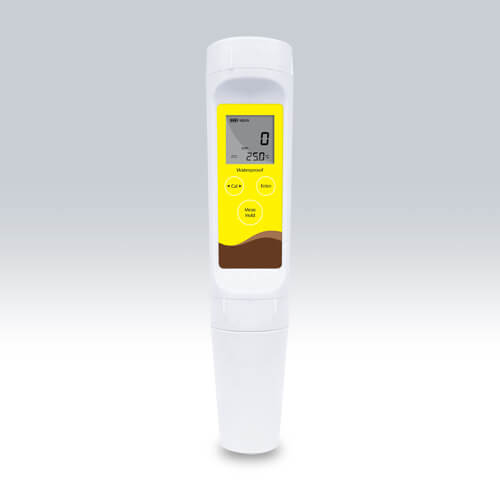
Understanding the Operating Principle and Scientific Foundation of the YR01814 Pocket TDS Meter
The YR01814 Pocket TDS Meter is an essential instrument for professionals needing precise measurements of total dissolved solids (TDS) in various solutions. Understanding the scientific principles behind its operation is crucial for effective use and accurate readings.
How the YR01814 Pocket TDS Meter Works
The YR01814 operates primarily on the principle of electrical conductivity. This meter measures the conductivity of a solution to determine the concentration of dissolved solids, with higher conductivity indicating a higher concentration of ions.
The device utilizes a platinum conductivity cell, which offers rapid and reliable measurement results. Conductivity is measured in micro-siemens (µS) or parts per million (ppm), depending on the calibration settings. The meter features an automatic calibration function that recognizes TDS standards of 71.8 ppm, 774.7 ppm, and 7447 ppm, allowing users to achieve accurate readings without extensive setup.
Key Formulas Involved
To convert conductivity into TDS, the YR01814 employs a conversion factor that can be adjusted between 0.1 to 1.0, with a default value set at 0.5. The formula used for calculating TDS is:
TDS (ppm) = Conductivity (µS/cm) × Conversion Factor
This formula illustrates how the TDS levels can be extrapolated from the conductivity readings, enabling users to interpret the results effectively.
Design Choices and Their Implications
The design of the YR01814 incorporates a robust and waterproof housing, ensuring that the device is suitable for use in various environments, including laboratories and fieldwork. The portable design allows for easy carrying, making it an ideal tool for professionals on the go.
Additionally, the meter features an auto-off function that conserves battery life, turning off after eight minutes of inactivity. This design choice is particularly beneficial for users who may forget to power down their devices, ultimately prolonging the lifespan of the equipment.
Comparison with Alternative Principles of Measurement
While the YR01814 employs the conductivity method, other methods for assessing TDS include gravimetric analysis and ion chromatography. However, these methods are often more time-consuming and require more extensive laboratory setups.
The conductivity method utilized by the YR01814 is advantageous due to its speed and ease of use, making it suitable for quick assessments in various fields, such as environmental testing, aquaculture, and laboratory analysis.
Technical Specifications of the YR01814
| Specification | Details |
|---|---|
| Model | YR01814 |
| TDS Range | 0 to 10,000 ppm |
| Resolution | 0.01, 0.1, 1 ppm |
| Accuracy | ±1% FS |
| Calibration Points | 1 to 3 points |
| Temperature Range | 0 to 60°C / 32 to 140°F |
| Power Supply | 2 AAA batteries |
| Battery Life | Approximately 200 hours |
| Weight | 100 grams |
Frequently Asked Questions
What is the recommended calibration frequency for the YR01814?
It is recommended to calibrate the YR01814 at least once a month, or more frequently if used in varying conditions or for critical measurements. Calibration ensures the accuracy of the readings and prolongs the lifespan of the device.
How do I interpret the results shown on the YR01814 display?
The display shows the TDS in ppm and may also indicate the conductivity in µS/cm. Understanding the normal ranges for your specific application is essential. For instance, drinking water typically should have a TDS of less than 500 ppm, while higher values may indicate contamination or the presence of minerals.
What should I do if the YR01814 displays an error code?
Common error codes may indicate calibration issues or sensor problems. Refer to the user manual for specific troubleshooting steps, which may involve recalibrating the device or checking the sensor for cleanliness or damage.
Can the YR01814 be used in different industries?
Yes, the YR01814 is versatile and can be used in various sectors, including environmental monitoring, aquaculture, laboratory analysis, and education. Its portability and quick-read features make it suitable across these fields.
How do I maintain the YR01814 for optimal performance?
To maintain the YR01814, keep the probe clean and free from residues. Regularly calibrate the device and store it in a protective case when not in use. Avoid exposing the meter to extreme conditions outside its specified range.
What is the maximum TDS range the YR01814 can measure?
The YR01814 can measure TDS levels ranging from 0 to 10,000 ppm, making it suitable for a wide array of applications, from drinking water analysis to monitoring solutions with high dissolved solids.
Where can I request a quote for the YR01814?
You can request a quote for the YR01814 through our dedicated channels for inquiries, where our team will assist you with your specific needs.
If you are looking for a fusion of innovation and quality, you have come to the right place. At Kalstein, we offer you the luxury of exploring our exclusive catalog of laboratory equipment. We manufacture every device to the highest standards of excellence. Our intuitive and seamless online purchasing channels are designed for your convenience, securing the most competitive prices. Hesitate no longer — we bring science to life, it is time to become part of our community.