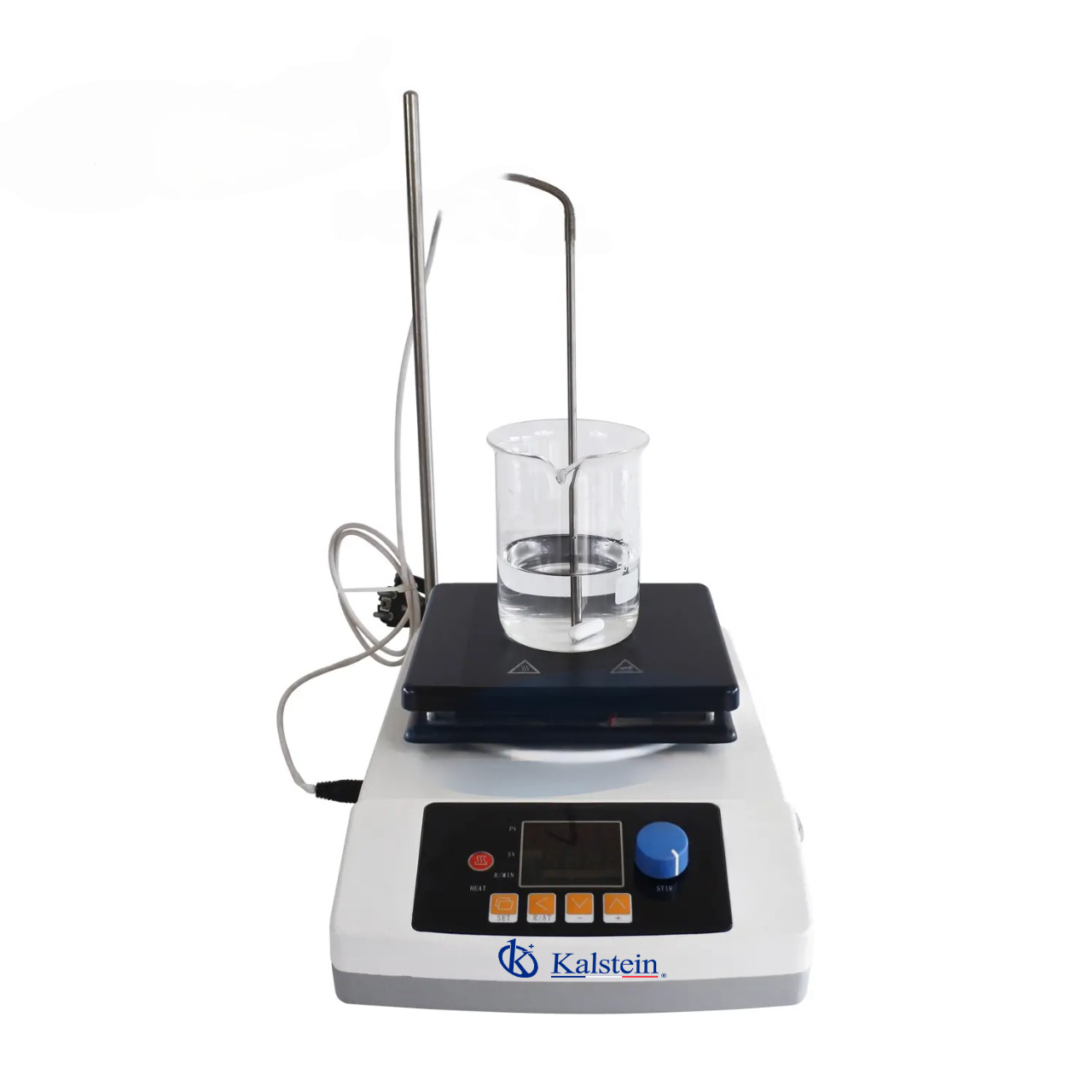
Navigating ISO/IEC Standards and Regulatory Compliance for Intelligent Digital Display Ceramic Top Hotplate Stirrers
The implementation of ISO/IEC standards in laboratory settings is critical for ensuring quality, safety, and efficiency. This article delves into how these standards relate to Intelligent Digital Display Ceramic Top Hotplate Stirrers, focusing on models such as YR02937, YR02938, YR02939, YR02940, YR02941, and YR02942. Understanding these connections can help laboratory professionals select the right equipment to ensure compliance and enhance laboratory operations.
Understanding ISO/IEC Standards Relevant to Laboratory Equipment
ISO/IEC standards provide a framework for quality and safety in laboratory operations. For instance, ISO 17025 specifies the general requirements for the competence of testing and calibration laboratories. This standard is particularly relevant for laboratories using Intelligent Digital Display Ceramic Top Hotplate Stirrers, as proper calibration and operational protocols are essential for ensuring accurate results. Compliance with these standards involves regular audits, documentation, and adherence to safety measures.
ISO 17025 Compliance and Its Importance
ISO 17025 compliance is crucial for laboratories utilizing equipment such as hotplate stirrers. It ensures that the methodologies used, including temperature control and mixing efficiency, meet international benchmarks. For example, the YR02940 model, with its PID temperature control, plays a vital role in maintaining temperature accuracy, which is critical for meeting ISO 17025 requirements. Laboratory managers should prioritize models that offer features aligning with these standards.
IEC 61010: Safety Standards in Laboratory Equipment
IEC 61010 pertains to the safety requirements for electrical equipment used in measurement, control, and laboratory use. This standard is vital for protecting laboratory personnel and equipment. When assessing models such as YR02941, which provides automatic PID temperature control, it is essential to ensure that they meet IEC 61010 safety standards. This includes features like over-temperature protection and electrical insulation, which prevent hazards during operation.
Documenting Compliance: Best Practices
Proper documentation is a cornerstone of regulatory compliance. Laboratories must maintain accurate records of equipment calibration, maintenance, and usage logs. For instance, with the YR02939 model’s temperature calibration features, labs can easily document compliance with ISO 17025. Implementing a systematic approach to documentation can help streamline audits and facilitate adherence to regulatory standards.
Traceability in Laboratory Operations
Traceability ensures that laboratory results can be linked to specific standards and methods. This is particularly important in the context of ISO/IEC standards. Hotplate stirrers, such as YR02938, with built-in capabilities for temperature monitoring, enhance traceability by providing digital records of temperature settings during experiments. Ensuring traceability helps validate results and supports compliance during external inspections.
Comparison of Available Models
| Model | ISO/IEC Clauses Covered | Traceability Features | Best For |
|---|---|---|---|
| YR02937 | ISO 17025, IEC 61010 | Digital temperature display | General laboratory use |
| YR02938 | ISO 17025, IEC 61010 | PID control with logging | Chemistry applications |
| YR02939 | ISO 17025 | Integrated calibration logs | Biological research |
| YR02940 | ISO 17025, IEC 61010 | Temperature monitoring | Advanced synthesis tasks |
| YR02941 | ISO 17025 | PID control | Routine lab applications |
| YR02942 | ISO 17025, IEC 61010 | Real-time temperature feedback | Quality control testing |
Common Mistakes and How to Avoid Them
Laboratories often fall into common traps when implementing ISO/IEC standards. One prevalent mistake is neglecting to regularly calibrate equipment such as Intelligent Digital Display Ceramic Top Hotplate Stirrers. Failure to do so can lead to inaccurate results and potential non-compliance. It's essential for laboratory personnel to establish a rigorous calibration schedule for models like YR02939, ensuring they meet the specific requirements outlined in ISO 17025.
Frequently Asked Questions
How do Intelligent Digital Display Ceramic Top Hotplate Stirrers meet ISO 17025 requirements?
Intelligent Digital Display Ceramic Top Hotplate Stirrers, such as the YR02938, comply with ISO 17025 by offering precise temperature control through PID systems, ensuring accuracy in temperature maintenance which is crucial for testing processes.
What are the key safety features of hotplate stirrers according to IEC 61010?
According to IEC 61010, key safety features include over-temperature protection and electrical insulation. For example, the YR02941 model is equipped with such features that safeguard against electrical hazards during operation.
Which hotplate stirrer model is best for compliance with laboratory regulations?
The YR02940 model is highly regarded for compliance with laboratory regulations, as its PID temperature control and robust safety features make it suitable for meeting ISO 17025 standards effectively.
How often should calibration be performed on hotplate stirrers?
Calibration for hotplate stirrers, such as the YR02942, should ideally be performed every six months to ensure compliance with ISO 17025 and maintain accuracy in experimental conditions.
What documentation is necessary for ISO compliance in laboratory environments?
Documentation such as calibration records, maintenance logs, and standard operating procedures is necessary for ISO compliance. Using models like YR02939, which feature integrated logging, facilitates maintaining accurate records.
How can traceability be ensured in laboratory tests using hotplate stirrers?
Traceability can be ensured by maintaining detailed logs of temperature settings and calibration data. Models like YR02938 provide digital displays that aid in documenting conditions for testing, thereby supporting compliance.
What factors should be considered when choosing a hotplate stirrer for a laboratory?
Key factors include compliance with ISO/IEC standards, safety features, temperature accuracy, and ease of use. The YR02940 model excels in these areas, making it a suitable choice for many laboratory applications.
How does PID control enhance the performance of hotplate stirrers?
PID control enhances performance by providing precise temperature regulation, which is essential for experiments requiring strict thermal conditions. The YR02941 model effectively utilizes this technology to meet laboratory standards.
If you are looking for a fusion of innovation and quality, you have come to the right place. At Kalstein, we offer you the luxury of exploring our exclusive catalog of laboratory equipment. We manufacture every device to the highest standards of excellence. Our intuitive and seamless online purchasing channels are designed for your convenience, securing the most competitive prices. Hesitate no longer — we bring science to life, it is time to become part of our community.