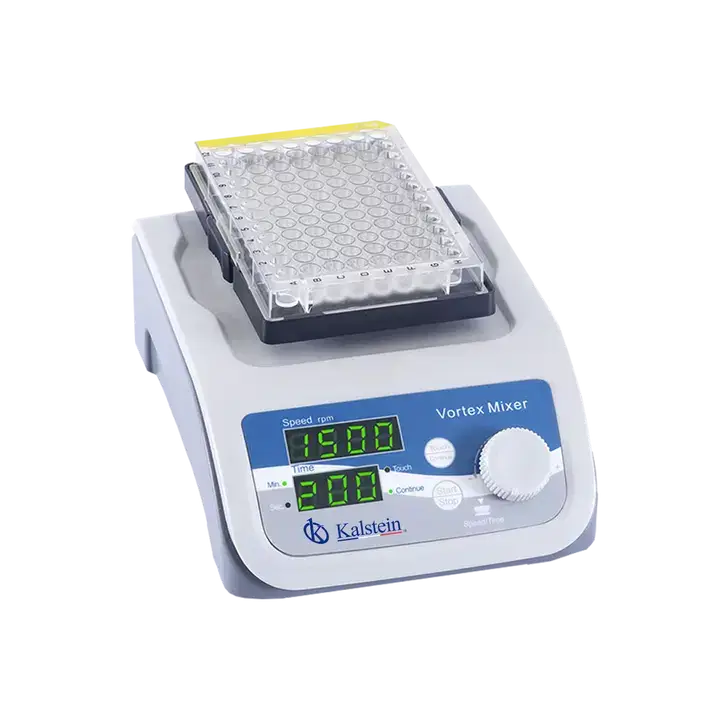
Interpreting Results and Reading Measurements with the YR06047-1 Vortex Mixer
The YR06047-1 Vortex Mixer is a crucial piece of laboratory equipment used for various applications, including sample homogenization and preparation of solutions. This article provides an in-depth understanding of how to interpret results and read measurements effectively when utilizing this essential tool. Accurate reading of measurements ensures reproducibility and reliability in experimental outcomes, making it a key focus for laboratory operators.
Understanding the Basics of Vortex Mixing
The YR06047-1 operates on the principle of vortex mixing, which involves creating a swirling motion in liquid samples. This motion facilitates the mixing of samples through centripetal force, leading to uniformity in sample composition. Understanding the dynamics of vortex mixing is essential for interpreting results accurately. The speed and duration of mixing can significantly impact the homogeneity of the sample, influencing measurement outcomes.
Technical Specifications of the YR06047-1
| Model | Brand | Category | Subcategory | Price (USD) | Price (EUR) | Weight (Net) | Weight (Gross) | Dimensions | Package |
|---|---|---|---|---|---|---|---|---|---|
| YR06047-1 | Kalstein | Vortex Mixer | Accessories | 8.50 | 0 | 0 | x x | 0 x 0 x 0 |
Interpreting Measurements: Units and Ranges
When working with the YR06047-1, it is important to understand the units of measurement associated with vortex mixing such as RPM (revolutions per minute) and the effect of these on sample results. It is essential to set the mixer to the appropriate speed, taking note of the viscosity and volume of the sample being mixed. Normal ranges for mixing typically span 300-3000 RPM, depending on the sample type.
Operators should be familiar with common misinterpretations that may occur, such as assuming that higher RPM always leads to better mixing. In fact, over-mixing can cause sample degradation, so it's crucial to define optimal mixing times and conditions based on specific protocols.
Common Mistakes in Reading Measurements
One of the frequent challenges operators face is the misreading of measurement results. Factors such as sample turbidity, bubble formation during vortexing, and equipment calibration all play a significant role in the accuracy of readings. Regular calibration of the YR06047-1 is essential for obtaining dependable results. It is advisable to include a calibration check as part of the routine maintenance schedule.
Operators should be trained to identify and correct these issues promptly to maintain the integrity of their measurements.
Practical Examples of Result Interpretation
Interpreting results from the YR06047-1 can be enhanced by practical examples. For instance, in a case study involving enzyme assays, the correct mixing speed and duration were critical for obtaining reliable absorbance readings. The results indicated a significant correlation between mixing parameters and enzyme activity, showcasing the necessity of precise measurement interpretation.
Operators should maintain detailed records of mixing conditions alongside their results to facilitate better understanding and future reference.
Environmental Considerations for Accurate Measurements
The environment in which the YR06047-1 operates can influence measurement outcomes. Factors such as temperature, humidity, and voltage fluctuations may affect the equipment's performance. Operators are encouraged to regularly monitor environmental conditions to ensure they remain within optimal ranges for laboratory equipment. This includes ensuring consistent room temperature and humidity levels as well as stable electrical supply to prevent variations in performance.
Frequently Asked Questions
What factors affect the accuracy of measurements with the YR06047-1?
Accuracy can be influenced by sample viscosity, mixing speed, duration, and environmental conditions. It's vital to maintain consistent mixing parameters to ensure reliable results.
How do I calibrate the YR06047-1 for optimal performance?
Calibration typically involves using a standard solution and ensuring that the readings on the display correspond with known values. Regular calibration checks help maintain measurement integrity.
What are the common misinterpretations of results when using the YR06047-1?
Common misinterpretations include assuming higher RPM always yields better mixing. Over-mixing can lead to sample degradation and inaccurate results.
What is the importance of recording mixing conditions alongside results?
Recording mixing conditions helps establish a reference for future experiments, enabling operators to replicate successful protocols and avoid past mistakes.
How can environmental factors impact the performance of the YR06047-1?
Temperature, humidity, and electrical stability can affect the mixing efficiency and measurement accuracy, making it essential to control these factors within the laboratory setting.
What are the recommended maintenance practices for the YR06047-1?
Routine maintenance should include regular cleaning, calibration checks, and monitoring of environmental conditions to ensure consistent performance.
Where can I find replacement parts or compatible accessories for the YR06047-1?
Replacement parts and compatible accessories can usually be sourced from the manufacturer or authorized distributors. It's important to use genuine parts to maintain equipment performance.
If you are looking for a fusion of innovation and quality, you have come to the right place. At Kalstein, we offer you the luxury of exploring our exclusive catalog of laboratory equipment. We manufacture every device to the highest standards of excellence. Our intuitive and seamless online purchasing channels are designed for your convenience, securing the most competitive prices. Hesitate no longer — we bring science to life, it is time to become part of our community.