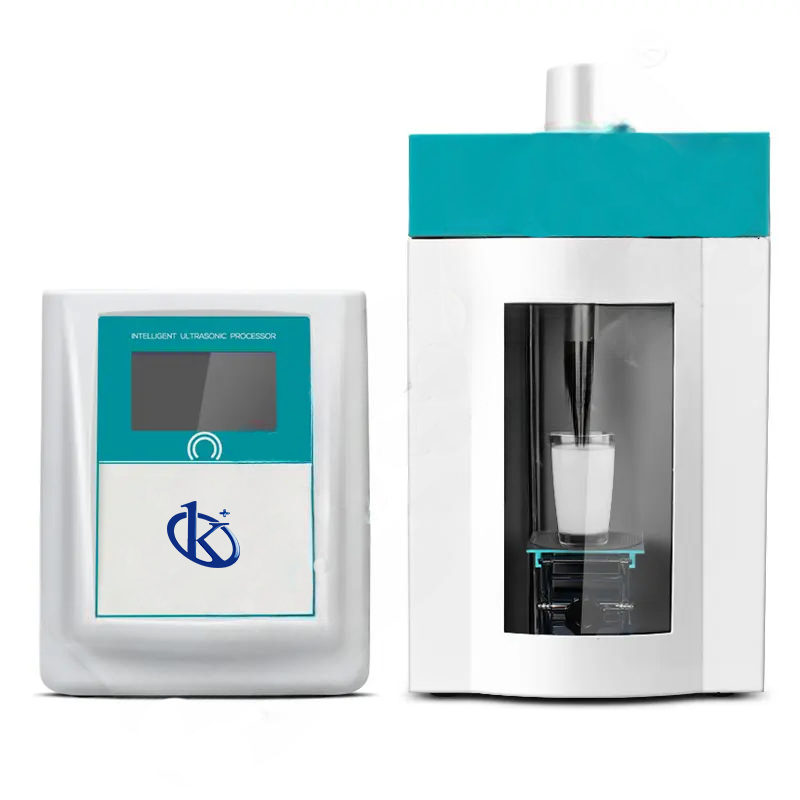
Integrating Ultrasonic Homogenizers with LIMS: Data Flow Digitalization Strategies
As laboratory environments evolve towards greater digitalization, the integration of ultrasonic homogenizers with Laboratory Information Management Systems (LIMS) becomes increasingly vital. This article delves into the strategies for effectively integrating these homogenizers into existing data workflows, enhancing operational efficiencies, and ensuring compliance with industry standards. Ultrasonic homogenizers, known for their versatile applications in sample processing, can significantly contribute to the automation and streamlining of data management in laboratories.
Understanding the Role of Ultrasonic Homogenizers in LIMS Integration
Ultrasonic homogenizers are essential tools for laboratories, providing efficient sample processing through ultrasonic cavitation. They enable the disruption of cells and the homogenization of mixtures, which is crucial in various applications ranging from pharmaceuticals to food science. When integrated with LIMS, these tools can automate data capture, improve traceability, and facilitate compliance with regulations.
Key Benefits of Integrating Ultrasonic Homogenizers with LIMS
Integrating ultrasonic homogenizers with LIMS offers numerous benefits, including:
- Improved Data Management: Automatic data capture from ultrasonic homogenizers reduces manual entry errors.
- Enhanced Compliance: Facilitating adherence to regulatory standards such as ISO 17025 through real-time data tracking.
- Streamlined Workflows: Automation of processes leads to increased throughput and reduced operational times.
- Data Integrity: Ensures that all data collected from experiments is securely stored and easily accessible.
Connecting Protocols and Interfaces for LIMS Integration
For seamless integration, ultrasonic homogenizers must support various connectivity protocols. Commonly used protocols include:
- HL7: Often used for health information exchange.
- ASTM: A standard for laboratory instruments ensuring compatibility.
- REST APIs: Allow for flexible and scalable integration solutions.
Comparison of Available Models
| Model | Power (Continuous) | Mixing Capacity | Best for |
|---|---|---|---|
| YR05015 | 1.5 – 150W | 0.1 – 150 ml | Small sample processing and research labs |
| YR05016 | 2-5 – 250 W | 0.1 – 300 ml | Medium scale applications and educational purposes |
| YR05017 | 10 – 650 W | 0.1 – 500 ml | Advanced research requiring higher efficiency |
| YR05018 | 10 – 900 W | 0.1 – 600 ml | Laboratories focused on complex sample types |
| YR05019 | 20 – 1 200W | 1 – 1 000 ml | High-throughput applications in industrial labs |
| YR05020 | 50 – 1 800W | 1 – 1 200ml | Large-scale industrial processes |
Common Mistakes and How to Avoid Them
When integrating ultrasonic homogenizers with LIMS, laboratories often make common mistakes, such as:
- Neglecting Compatibility: Always check if the homogenizer supports the LIMS protocols.
- Overlooking Training: Ensure staff are trained to use both the homogenizer and LIMS effectively.
- Insufficient Testing: Conduct thorough testing of the integration to identify potential issues before full deployment.
Strategies for Effective Data Flow Digitalization
To effectively digitize data flows through ultrasonic homogenizers, consider these strategies:
- Automation: Implement automated data logging and reporting features for better accuracy.
- Data Security: Use secure data storage solutions to protect sensitive information.
- Regular Updates: Continuously update the LIMS software to include new features and maintain compatibility.
Data Integrity and Traceability Requirements
Maintaining data integrity is essential in laboratory operations. Integrating ultrasonic homogenizers with LIMS helps in:
- Traceability: Keep accurate records of sample processing and results linked to specific operators.
- Audit Trails: Ensure that any changes to data can be tracked for compliance purposes.
- Real-time Monitoring: Monitor experiments as they happen to ensure deviations can be addressed immediately.
Frequently Asked Questions
How can I ensure compliance with ISO 17025 using ultrasonic homogenizers?
To ensure compliance with ISO 17025, ultrasonic homogenizers like the YR05019 must be integrated with a LIMS that supports traceability and data integrity. This ensures that all process parameters are logged, and results are easily accessible for verification.
Which ultrasonic homogenizer model is best for high-throughput laboratory applications?
The YR05020, with a continuous power of 50 – 1,800 W and a mixing capacity of up to 1,200 ml, is ideal for high-throughput applications. Its robust power ensures efficient processing of large sample volumes, making it suitable for industrial labs.
What key features should I look for in a LIMS compatible with ultrasonic homogenizers?
Look for LIMS that support protocols like ASTM and REST APIs for easy integration. Features such as automated data capture, real-time monitoring, and audit trails are also crucial for ensuring compliance and efficiency.
How do ultrasonic homogenizers improve laboratory efficiency in data handling?
Ultrasonic homogenizers streamline laboratory efficiency by automating data logging and reducing manual errors. For example, models like YR05016 provide real-time data capture, enhancing the accuracy and speed of laboratory workflows.
What are the risks of not integrating LIMS with ultrasonic homogenizers?
Without LIMS integration, laboratories risk data loss, compliance issues, and increased manual workload. This can lead to costly errors and inefficient processes, especially in regulated environments where accurate data is critical.
Can ultrasonic homogenizers reduce operational costs in laboratories?
Yes, ultrasonic homogenizers can reduce operational costs by minimizing reagent waste and processing times. The YR05018 model, for instance, optimizes the mixing capacity, allowing for more samples to be processed in less time.
If you are looking for a fusion of innovation and quality, you have come to the right place. At Kalstein, we offer you the luxury of exploring our exclusive catalog of laboratory equipment. We manufacture every device to the highest standards of excellence. Our intuitive and seamless online purchasing channels are designed for your convenience, securing the most competitive prices. Hesitate no longer — we bring science to life, it is time to become part of our community.