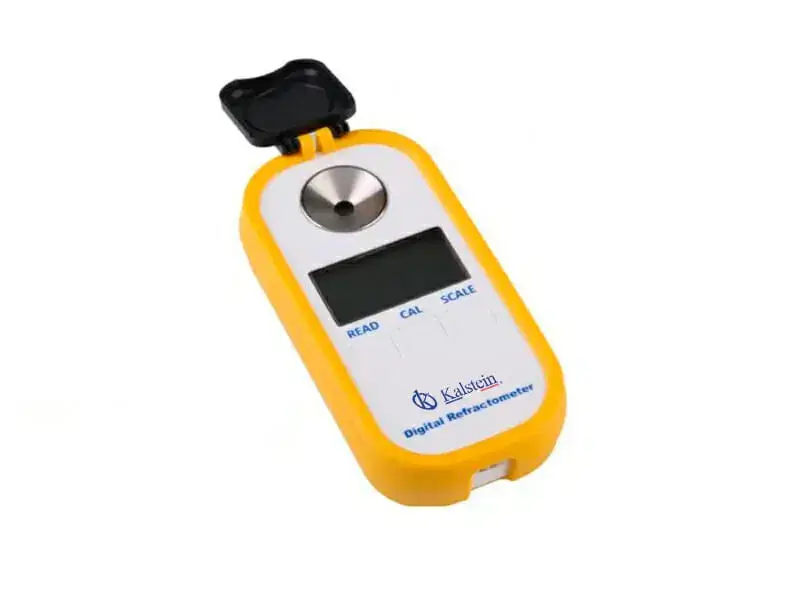
How to Integrate Digital BRIX+ Salinity Refractometers with LIMS for Data Flow Digitalization
In today's fast-paced laboratory environment, the efficient integration of instruments like Digital BRIX+ Salinity Refractometers with Laboratory Information Management Systems (LIMS) is paramount. This integration facilitates seamless data flow, improving productivity, accuracy, and compliance. In this article, we will explore various models of Digital BRIX+ Salinity Refractometers, focusing on their compatibility with LIMS and how they can drastically enhance laboratory workflows.
Understanding the Digital BRIX+ Salinity Refractometer Family
The Digital BRIX+ Salinity Refractometers are versatile instruments used primarily for measuring the concentration of soluble solids, like sugar, and salinity levels in various aqueous solutions. The family includes models YR05961, YR05962, YR05963, YR05964, and YR05965, each designed with unique features that cater to the specific needs of laboratories.
Overview of Models
- YR05961: Best for Brix measurement (0-50%) with ±0.2% accuracy and temperature compensation.
- YR05962: Focuses on salinity measurement (0-280‰) with similar accuracy and temperature control.
- YR05963: Another salinity model but with a different precision level (±2‰).
- YR05964: Measures density (1.000-1.217) with high precision (±0.002).
- YR05965: Designed for refractive index measurement (1.3330–1.4200nD) with exacting standards.
Comparison of Available Models
| Model | Measurement Range | Min Division | Accuracy | Temperature Compensation |
|---|---|---|---|---|
| YR05961 | Brix 0-50% | 0.10% | ±0.2% | Yes (0-40°C) |
| YR05962 | Salinity 0-280‰ | 0.10% | ±0.2% | Yes (0-40°C) |
| YR05963 | Salinity 0-280‰ | 1‰ | ±2‰ | Yes (0-40°C) |
| YR05964 | Density 1.000-1.217 | 0.001 | ±0.002 | Yes (0-40°C) |
| YR05965 | Refractive Index 1.3330-1.4200nD | 0.0001nD | ±0.0003nD | Yes (0-40°C) |
Benefits of LIMS Integration with Digital BRIX+ Salinity Refractometers
Integrating these refractometers with a LIMS allows for automated data entry, which minimizes human error and enhances data integrity. The digitalization of flow data through LIMS makes it easier to track sample histories, generate reports, and maintain compliance with regulatory standards.
How LIMS Enhances Data Flow
By connecting models like the YR05961 and YR05962 to a LIMS, laboratories can set up automatic data transmission protocols, ensuring that every measurement is logged accurately in real-time. This integration supports several communication protocols such as HL7, ASTM, and REST, enabling laboratories to keep workflows efficient.
Common Mistakes and How to Avoid Them
Many laboratories encounter issues during the integration process due to lack of planning or inadequate training. Common mistakes include failing to customize the LIMS to meet specific laboratory needs, underestimating the time required for integration, and neglecting to provide sufficient employee training on new systems.
- Neglecting Customization: Always tailor the LIMS to fit the specific workflows of your laboratory.
- Insufficient Training: Provide comprehensive training sessions for all laboratory staff to ensure they are comfortable with the new system.
- Underestimating Integration Time: Develop a realistic timeline for the integration process to avoid bottlenecks.
Data Sovereignty and Security Considerations
When integrating Digital BRIX+ Salinity Refractometers with LIMS, it’s crucial to consider data sovereignty and security. Ensure that all data handling complies with local regulations and standards, such as ISO/IEC 17025, to maintain legal protection and integrity of laboratory data.
Connecting Refractometers to LIMS: Step-by-Step
The process of connecting a Digital BRIX+ Salinity Refractometer to a LIMS can be simplified into several key steps:
- Choose the appropriate communication protocol that fits your laboratory's infrastructure.
- Set up data mapping in the LIMS to correspond with the refractometer measurements.
- Test the system with a small number of samples to ensure accurate data transmission.
- Train staff on the new workflow and provide guidelines for troubleshooting.
Frequently Asked Questions
How does integrating Digital BRIX Refractometers with LIMS improve data accuracy?
Integrating models like the YR05961 and YR05962 with LIMS enhances data accuracy by automating data entry and ensuring real-time logging of measurements. This minimizes human error, thereby improving the integrity of the results recorded in the system.
What connectivity protocols are necessary for Digital BRIX+ Salinity Refractometers?
Protocols such as HL7, ASTM, and REST are essential for integrating Digital BRIX+ Salinity Refractometers with a LIMS. These protocols facilitate seamless communication between devices, enabling efficient data transfer and management throughout laboratory processes.
Which model is best for measuring salinity in aquatic environments?
The YR05962 model is specifically designed for salinity measurement, offering a range of 0-280‰ and high accuracy of ±0.2%. This makes it an excellent choice for laboratories working with aquatic environments.
How can I ensure compliance with ISO/IEC standards while using refractometers?
To ensure compliance with ISO/IEC 17025, utilize models such as YR05961 and YR05962, which support automatic temperature compensation and high accuracy. Additionally, maintain comprehensive documentation and follow standard operating procedures for all measurements.
What are the advantages of real-time data logging with LIMS integration?
Real-time data logging through LIMS integration allows laboratories to maintain up-to-date records, track sample histories, and generate timely reports. This process enhances overall productivity and facilitates better decision-making based on accurate data.
Can Digital BRIX Refractometers be used in remote locations?
Yes, models like the YR05964 and YR05965 can be utilized in remote locations, especially if they are paired with a portable LIMS solution. Their compact design and battery operation allow for field deployment in various environments.
How do I choose the right Digital BRIX Refractometer for my laboratory needs?
Choosing the right model depends on your specific measurement requirements. For Brix measurements, the YR05961 is ideal, while for salinity, the YR05962 is preferable due to its precise salinity range and functionality.
What training is required for staff to effectively use LIMS-integrated refractometers?
Staff should undergo training on the LIMS software, the specific functionalities of the Digital BRIX+ Salinity Refractometers, and best practices for data handling. Proper training ensures that employees are well-equipped to utilize the technology efficiently and accurately.
If you are looking for a fusion of innovation and quality, you have come to the right place. At Kalstein, we offer you the luxury of exploring our exclusive catalog of laboratory equipment. We manufacture every device to the highest standards of excellence. Our intuitive and seamless online purchasing channels are designed for your convenience, securing the most competitive prices. Hesitate no longer — we bring science to life, it is time to become part of our community.