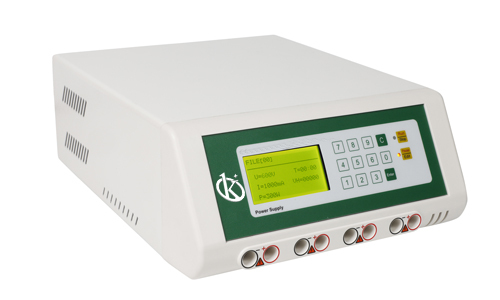
High Voltage Power Supply: Applications and Best Practices 2026
High Voltage Power Supplies (HVPS) play a crucial role in various laboratory settings, particularly in research, biotechnology, and academia. In 2026, these devices continue to support a wide range of applications, from electrochemistry to material testing. This article provides an in-depth look at their applications, historical evolution, usage protocols, techniques, and essential best practices.
What is it used for in 2026
High Voltage Power Supplies are utilized across multiple laboratory environments due to their ability to provide constant voltage, current, or power outputs for various applications. Key uses include:
- Electrophoresis in biotechnology research.
- Material testing and characterization.
- Industrial applications such as electrical insulation testing.
- Device testing in semiconductor and electronics labs.
- Particle acceleration in physics experiments.
History and evolution of the technology
The development of High Voltage Power Supplies dates back to the early 20th century alongside advancements in electrical engineering. Early models were primarily mechanical, providing limited functionality. Over the decades, significant advancements in microprocessor technology and digital control systems have transformed HVPS into highly sophisticated, user-friendly devices that can store multiple operation protocols and deliver precise outputs. Today, modern HVPS are equipped with touch controls, LCD displays, and automated error detection.
How to use it step by step
Using a High Voltage Power Supply involves the following steps:
- Setup: Place the HVPS on a stable surface, ensuring it is properly connected to the power source and grounding.
- Configuration: Use the touch controls to set your desired voltage, current, and power parameters based on your specific application.
- Electrophoresis Method (if applicable): Load your sample and adjust settings to store the necessary protocols.
- Monitoring: Keep an eye on the output values displayed on the LCD to ensure they meet your experimental needs.
- Shutdown: Once testing is complete, ensure to turn off the unit and safely disconnect it from the power supply.
Best techniques and protocols
Best practices when using High Voltage Power Supplies include:
- Calibrating the device regularly to ensure accuracy.
- Developing standard operating procedures (SOPs) for consistent results across experiments.
- Utilizing appropriate personal protective equipment (PPE) when operating under high voltage conditions.
- Implementing adequate cooling measures if the device runs continuously for long periods.
Practical applications by laboratory type
Different laboratories employ HVPS in various ways:
Research Laboratories
In research settings, HVPS is key for experiments that require precise voltage control for reaction kinetics or material properties.
Biotechnology Laboratories
These labs often use HVPS for electrophoresis, allowing separation of nucleic acids or proteins based on size.
Industrial Laboratories
In industrial environments, HVPS is essential for testing electrical components and ensuring safety standards are met.
Regulations, standards and certifications
When using High Voltage Power Supplies, it is crucial to adhere to safety regulations and standards such as IEC 61010 and UL 61010, which outline safety measures for electrical equipment in laboratories. Additionally, obtaining devices that comply with ISO certifications can further ensure quality and reliability.
Comparison with alternative technologies
While High Voltage Power Supplies are widely used, alternative technologies include:
- Linear Power Supplies: Known for stability but less efficient in terms of size and weight.
- Switching Power Supplies: More compact and efficient but can introduce noise into sensitive applications.
- Programmable Power Supplies: Provide similar functionality with advanced programmability for automated tasks.
Comparison of available models
| Model | Best for | Key specs | Recommended use case |
|---|---|---|---|
| YR03409 | Electrophoresis | 20–3000 V, 1–200 mA, 1–200 W | Storing multiple electrophoresis methods. |
| YR03408 | Biotechnology applications | 20–5000 V, 1–200 mA, 1–100 W | Complex protocol storage and control. |
| YR03405 | Material testing | 10–600 V, 1–500 mA, 1–300 W | Testing under variable conditions. |
| YR03406 | Research applications | 20–1600 V, 1–100 mA, 1–160 W | Real-time monitoring during experiments. |
| YR03407 | Electronics testing | 20–3000 V, 1–400 mA, 1–400 W | High current applications in testing. |
Common mistakes and how to avoid them
Common mistakes include:
- Failing to calibrate the device regularly, which can lead to inaccurate results.
- Ignoring safety protocols, particularly with high voltage.
- Not storing enough protocols in the device for complex experiments.
To avoid these, establish a regular maintenance schedule and ensure all laboratory personnel are trained in safe operation practices.
Maintenance, calibration and good practices 2026
Regular maintenance and calibration are essential to ensure the longevity and accuracy of High Voltage Power Supplies:
- Inspect electrical connections and components periodically for any signs of wear.
- Calibrate the output voltage and current settings every six months or before critical experiments.
- Keep the device clean and dust-free to prevent overheating and malfunction.
Cost-benefit analysis 2026
Investing in High Voltage Power Supplies can be justified by their versatile applications and reliability. The cost of these devices can be balanced by:
- Reducing experimental errors and variability.
- Increasing throughput by enabling multiple configurations.
- Providing long-term savings through durability and minimal maintenance needs.
Frequently asked questions
What safety measures should I take when using a High Voltage Power Supply?
Always wear appropriate PPE, ensure proper grounding, and be familiar with the device's emergency shutdown procedures. Avoid working alone when operating under high voltage conditions.
How do I choose the right model for my laboratory needs?
Consider the specific applications, required output ranges, and features such as programmability and memory storage. Assess your laboratory's unique requirements and select a model that meets those criteria.
Can High Voltage Power Supplies be used for different experiments?
Yes, many High Voltage Power Supplies are versatile and can handle various applications as long as the voltage and current requirements fall within the device's specifications.
What maintenance is required for High Voltage Power Supplies?
Regular calibration, cleaning, and inspection of connections are essential for optimal functionality. Following the manufacturer's guidelines for maintenance is recommended.
How often should I calibrate my High Voltage Power Supply?
Calibration should be performed at least every six months or more frequently depending on usage intensity and laboratory standards.
Are there training resources available for using High Voltage Power Supplies?
Most manufacturers provide user manuals and online resources. Additionally, many laboratories offer training sessions for their staff on best practices and operational protocols.
How can I request a quote for purchasing a High Voltage Power Supply?
Please contact us directly to request a quote tailored to your specific needs.
If you are looking for a fusion of innovation and quality, you have come to the right place. At Kalstein, we offer you the luxury of exploring our exclusive catalog of laboratory equipment. We manufacture every device to the highest standards of excellence. Our intuitive and seamless online purchasing channels are designed for your convenience, securing the most competitive prices. Hesitate no longer — we bring science to life, it is time to become part of our community.