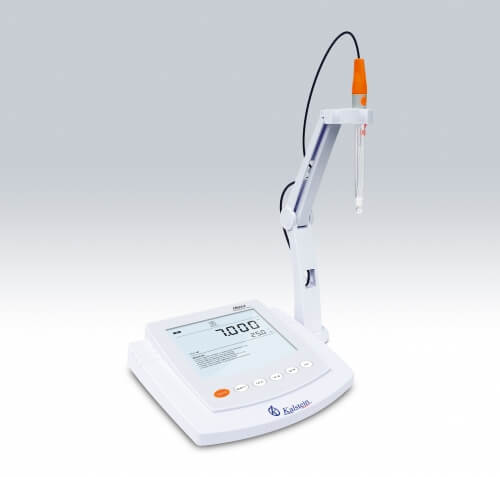
Evaluating ROI and Cost-Benefit Analysis for Table Conductivity Controllers
Understanding the return on investment (ROI) and conducting a thorough cost-benefit analysis are critical components for laboratory professionals when it comes to selecting table conductivity controllers. This article delves deep into these aspects, guiding you through the various models available, their specific advantages, and how to choose the one that enhances laboratory efficiency while ensuring compliance with industry standards.
Understanding ROI in Laboratory Equipment
ROI is a financial metric that evaluates the efficiency of an investment. In the context of laboratory equipment, particularly table conductivity controllers, calculating ROI involves analyzing the expenses incurred versus the benefits gained over time. Factors that contribute to ROI include initial costs, maintenance expenses, efficiency improvements, and the potential for reduced operational costs.
When assessing table conductivity controllers, it is essential to consider not only the purchase price but also the long-term savings they can provide, especially in environments that require frequent conductivity testing. An effective ROI calculation will help establish whether the investment is justified based on the expected benefits.
Cost-Benefit Analysis: Key Factors to Consider
A cost-benefit analysis (CBA) is a systematic approach for calculating and comparing benefits and costs of a project, decision or government policy. For laboratory equipment such as table conductivity controllers, the CBA should include:
- Initial Purchase Cost: The upfront expenditure associated with acquiring the equipment.
- Operational Costs: This includes maintenance, calibration, and potential repair costs over time.
- Efficiency Gains: Improvements in accuracy, speed, and reliability that can lead to increased throughput in the lab.
- Compliance and Quality Assurance: Costs involved in ensuring the equipment meets industry standards and regulations.
- Training and Support: Expenses related to training staff and any ongoing support services required.
Comparison of Available Models
| Model Code | Initial Cost (USD) | Calibration Points | Best For | Efficiency Improvement |
|---|---|---|---|---|
| YR01836-1 | 355.00 | 1 to 5 | Laboratories requiring multi-parameter testing | High accuracy and flexibility |
| YR01836 | 199.00 | 1 to 5 | General laboratory use | Improved data handling |
| YR01829-1 | 160.00 | 1 to 3 | Daily testing and control | Reliable performance |
| YR01829-2 | 235.00 | 1 to 3 | Standard lab applications | Consistent results |
| YR01829 | 285.00 | 1 to 3 | High-level research environments | Advanced features and automation |
| YR01828 | 232.00 | 1 to 3 | Integrated multi-parameter analysis | Enhanced data visualization |
Common Mistakes and How to Avoid Them
When investing in table conductivity controllers, there are several common pitfalls that laboratory professionals should be wary of, such as:
- Focusing Solely on Initial Cost: Many laboratories often prioritize low upfront costs without considering long-term operational efficiencies and maintenance. It is essential to evaluate total lifecycle costs.
- Neglecting Calibration Requirements: Selecting a model that does not support the necessary calibration points for specific applications can lead to inaccuracies. Always choose models that align with your testing needs.
- Overlooking Usability: Advanced features are beneficial, but if they complicate daily operations, they can hinder productivity. Opt for models that provide a balance between functionality and ease of use.
- Ignoring Vendor Support: The absence of adequate support can lead to prolonged downtime and additional costs. Ensure that the manufacturer offers reliable customer service and training.
Understanding the Importance of Calibration
Calibration is a critical process in ensuring the accuracy and reliability of conductivity measurements in any laboratory setting. Each model of table conductivity controllers comes with specific calibration capabilities, affecting their suitability for different applications. For instance, the YR01836-1 offers 1 to 5 calibration points, making it ideal for precise multi-parameter testing, while the YR01829 is suitable for standard applications with 1 to 3 points.
Regular calibration not only helps maintain accuracy but also supports compliance with industry standards, including ISO 17025, which mandates that measuring equipment must be calibrated regularly to ensure reliability in test results. Budgeting for calibration is a vital aspect of the cost-benefit analysis for any lab.
Energy Efficiency and Sustainability Considerations
As laboratories focus on sustainability, energy consumption has become a crucial factor when evaluating table conductivity controllers. Models that offer lower energy consumption not only reduce lab operational costs but also minimize environmental impact. For example, models like the YR01829 feature advanced microprocessors that optimize energy use without sacrificing performance.
When conducting your cost-benefit analysis, consider the total energy footprint of each model over its expected lifespan. Implementing energy-efficient practices can lead to significant savings and align with sustainability goals within the laboratory environment.
Frequently Asked Questions
What is the return on investment for a table conductivity controller in a lab setting?
The ROI for a table conductivity controller, like the YR01836, can vary based on initial costs and operational efficiency. A thorough analysis of savings from decreased reagent use and improved accuracy can justify the investment within a few months.
How much does a compliant table conductivity controller cost for laboratories?
The costs for compliant table conductivity controllers vary, with models like the YR01836 priced at $199.00, and the YR01836-1 at $355.00. Evaluating their capabilities in meeting compliance standards is crucial.
Which features should I prioritize in a table conductivity controller for cost-effectiveness?
Prioritize features such as multi-point calibration, energy efficiency, and user-friendly interfaces. For example, the YR01829 offers essential functionalities at a competitive price, ensuring cost-effectiveness in daily operations.
What maintenance costs can be expected for a table conductivity controller?
Maintenance costs for models like the YR01829 typically include regular calibration and occasional repairs, which together can average around 10-15% of the initial purchase price yearly, ensuring operational reliability.
How do I ensure my table conductivity controller meets ISO 17025 requirements?
To ensure compliance with ISO 17025, select models like the YR01836 that provide extensive calibration options and maintain detailed records of calibration and performance, which are necessary for compliance audits.
What is the best choice for a high-throughput laboratory requiring conductivity testing?
The YR01829, with its advanced features and quick response time, is an excellent choice for high-throughput labs needing reliable conductivity testing while managing costs effectively.
If you are looking for a fusion of innovation and quality, you have come to the right place. At Kalstein, we offer you the luxury of exploring our exclusive catalog of laboratory equipment. We manufacture every device to the highest standards of excellence. Our intuitive and seamless online purchasing channels are designed for your convenience, securing the most competitive prices. Hesitate no longer — we bring science to life, it is time to become part of our community.