
Effectiveness of Incubator Phototherapy to Treat Neonatal Hypoglycemia

Phototherapy is a form of treatment used to treat neonatal hypoglycemia. This therapy is done by exposing newborns to a bright light source, usually through an incubator. The purpose is to lower the bilirubin level in the baby’s blood, which in turn can help treat hypoglycemia…
The use of the Incubator of Phototherapy to improve the stability of the Newborn

There are many types of incubators, but the principles are the same: the incubator keeps the baby warm, often with the help of a humidifier to add moisture to the air. The incubator also provides a controlled environment, which means the baby is protected from drafts and other sources of infection…
Study of the Efficacy of Patient Monitors in the Treatment of Chronic Diseases

Within the last few years, the use of patient monitors to help in the treatment of chronic diseases has become more common. This is due to numerous benefits that Patient monitors can offer health professionals: better information to help direct treatment, the option to monitor a patient remotely, and greater access to information to keep abreast of changes in the patient’s condition.
Why is it important to measure Viscosity in the Laboratory?
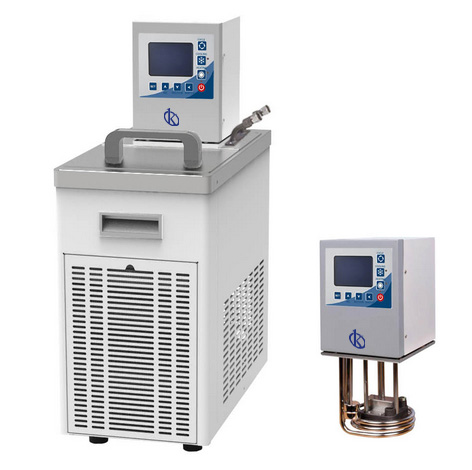
Viscosity is a measure of the friction contained in a liquid. This friction resistance becomes evident as soon as one layer of the liquid is put into motion against another. The higher the friction, the greater the force needed to induce this movement, which is called “shearing.” Shearing occurs whenever liquids move or physically separate when poured, stained, sprayed, or mixed. High viscosity liquids require more force than low viscosity liquids.
Use of the Viscometer for the Production of Cosmetics

Viscosity belongs to the field of rheology, change of form and flow of substances, elasticity, viscosity and plasticity. Since viscosity is the measure of internal friction in a fluid, viscometers act as a tool within rheology. Viscometers have a place in many industries.
Energy efficiency of electrosurgical equipment

Energy efficiency is a matter for all of us, and we are worried about revenge in all areas of the world. In the field of electrosurgical equipment, this concern is evidenced in multiple initiatives that seek to improve existing techniques and models with a view to optimizing the creation of electrical energy for the realization of surgeries.
What technology the Electro-Surgical Unit uses

The Electro Surgical Unit has helped surgeons for many years by offering an effective way to perform minimally invasive surgical procedures with little bleeding. With the advancement of technology, there has been a significant improvement, with the availability of the Electrosurgical Unit to improve the safety and results of surgical procedures.
What are the advantages and disadvantages of liquid nitrogen?

Nitrogen is a chemical element that has multiple uses, either in elemental form in gaseous state, in liquid state or the diversity of compounds that can be synthesized from it. Its use in the liquid form has its advantages that are related to the specific field where it is applied, while its disadvantages are more homogeneous and depend on the intrinsic properties of having a gaseous compound under conditions of pressure and temperature to be in liquid form.
What is a liquid nitrogen container?

Nitrogen is a chemical element that makes up the majority of the atmosphere, approximately 78.03% by volume and 75.5% by weight. It is an inert gas, except when heated and combined with active metals such as magnesium or lithium. It also forms oxides of nitrogen, when combined with oxygen, and ammonia, when combined with hydrogen.
Importance of Liquid Nitrogen for Fire Extinguishers

Fires are undoubtedly one of the least desired events, because of the risk it poses to life and the material good to which it destroys. Therefore, it is always advisable to have in a visible place and at hand an extinguisher, which allows to extinguish the fire before it spreads.