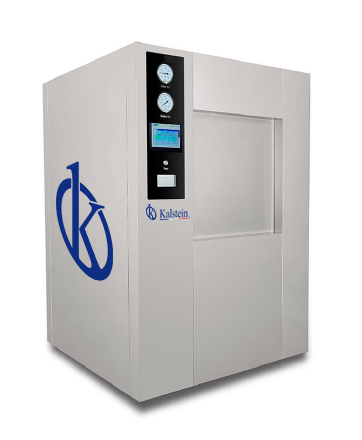
The Horizontal Pulsating Vacuum Autoclave Automatic Vertical Sliding Door models YR05651 and YR05654-1 by Kalstein are state-of-the-art sterilization systems designed for efficiency, reliability, and superior performance. These autoclaves come equipped with a horizontal design and a sophisticated vertical sliding door mechanism, offering ease of use and maximized space efficiency. Suitable for a range of laboratory applications, these autoclaves are ideal for laboratories requiring dynamic and high-capacity sterilization, presenting advanced vacuum and heating technology that ensure thorough sterilization of even the most complex instruments. Kalstein's software integration supports seamless operation and monitoring capabilities, enabling precision and reliability in all sterilization cycles.
On the other hand, the Vertical Sliding Door Autoclave model 69 by Steris is praised for its robust performance in healthcare and life sciences sectors. This model features vertical sliding doors and is widely recognized for its user-friendly design and consistent, thorough steam sterilization processes. With an effective and reliable sterilization cycle, it is an excellent choice for healthcare facilities that handle a medium to high volume of daily sterilization. Steris emphasizes on safety and ease of maintenance, ensuring that operations are smooth and interruptions are minimized. Both models, while outstanding, cater to specific needs within professional settings while offering exceptional reliability and performance.
| Feature | Kalstein Horizontal Pulsating Vacuum Autoclave | Steris Vertical Sliding Door Autoclave Model 69 |
|---|---|---|
| Design | Horizontal with Vertical Sliding Door | Vertical Sliding Door |
| Capacity | High-capacity chamber | Medium to high volume capacity |
| Technology | Advanced vacuum and heating system | Steam sterilization |
| Software Integration | Kalstein software for monitoring and operation | Standard monitoring features |
| Safety Features | Enhanced safety protocols | Strong emphasis on safety |
How They Work
The Kalstein Horizontal Pulsating Vacuum Autoclave operates through a sophisticated vacuum and heating mechanism that ensures effective sterilization. The vacuum removes air, allowing steam to penetrate even the most complex structures. The door's vertical sliding mechanism allows for easy chamber access. Steris’ model 69 utilizes steam sterilization, where high-pressure steam effectively sanitizes instruments. The vertical door mechanism with integrated safety protocols ensures smooth operation and robustness in cycle performance.
What It’s For
The Kalstein Horizontal Pulsating Vacuum Autoclave is specifically designed for laboratories and industrial settings where high-volume and complex sterilization processes are required. It is excellent for sterilizing medical devices, laboratory instruments, and industrial equipment, where reliable sterilization is crucial.
Types
Kalstein offers the Horizontal Pulsating Vacuum Autoclave in two models: YR05651 and YR05654-1, catering to different capacity needs. Steris offers Model 69, designed for medium to high-volume sterilization requirements across healthcare and life science applications.
Market Price
The market price for such advanced autoclave systems typically varies based on capacity, technological features, and brand. The Kalstein models are competitively priced, focusing on providing advanced technology and software integration at a reasonable cost, while the Steris Model 69 targets healthcare and life sciences facilities that prioritize safety and reliability.
Frequently Asked Questions
What capacity do these autoclaves accommodate?
The Kalstein model caters to high-capacity needs, while the Steris model is suitable for medium to high volumes.
Are these models suitable for continuous operation?
Yes, both models are designed for continuous operation in high-demand settings, ensuring efficiency and reliability.
What are the key maintenance protocols?
Both models require regular checks and adherence to maintenance protocols to ensure optimal performance, though Kalstein offers enhanced software monitors for this purpose.
Advantages and Disadvantages
Kalstein's Advantages: Features advanced vacuum and heating technologies, high-capacity design, seamless software integration, and efficient space utilization with a vertical sliding door.
Steris' Advantages: Reliable steam sterilization with a focus on safety and user-friendliness, ideal for healthcare environments.
Kalstein's Disadvantages: Higher complexity due to advanced technology may require professional handling.
Steris' Disadvantages: The emphasis on steam sterilization could limit technological advancements in vacuum usage.
Usage in the Field
The Kalstein Horizontal Pulsating Vacuum Autoclave is predominantly used in laboratory settings requiring precise control over sterilization cycles, such as in pharmaceutical or industrial research. It provides reliable service in sterilizing equipment that requires a vacuum for effective steam penetration. The Steris Model 69 is frequently used in hospitals and healthcare facilities, providing efficient sterilization for medical instruments.
Recommendations
For optimal use of the Kalstein model, it is recommended to integrate regular software updates and follow maintenance protocols. Ensure proper training for staff using the advanced options available. Steris users should adhere strictly to maintenance schedules and capitalize on the model’s safety features.
If you're searching for a blend of innovation and quality, you've reached the right place. At Kalstein, we offer you the luxury of exploring our exclusive catalog of laboratory equipment. We manufacture each piece with a level of excellence. Our intuitive and agile online purchase channels are designed for your convenience, ensuring the most friendly prices. Wait no more; we give life to science—it's time to become part of our community. Explore our Autoclaves.