Description
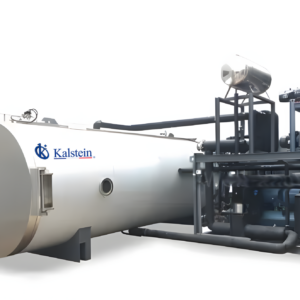
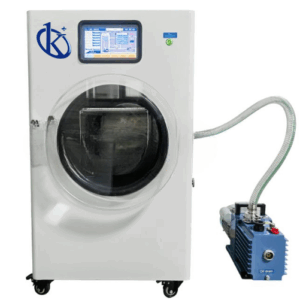
The Silicone Oil Heating Lyophilizer models YR05985-1 and YR05985-2 are cutting-edge vacuum freeze dryers designed for in-situ lyophilization, enhancing ease of operation and automation in the drying process. These innovative freeze dryers feature shelf heating with programmable functions that memorize the lyophilization curve, allowing users to monitor the material’s freeze-drying process meticulously. With a transparent acrylic door in the drying chamber, users can easily observe the progress of lyophilization.
The YR05985-1 model is equipped with a freeze-drying area of 0.7 m², while the YR05985-2 offers an extended area of 1.04 m², making it a versatile choice for various load requirements. Both units utilize high-quality components such as renowned brand compressors and dual-machine cascade refrigeration, delivering high efficiency, energy savings, and a long service life, complemented by low operational noise.
These lyophilizers are ideally suited for applications in medicine, pharmaceuticals, biological research, chemical industries, and food preservation. The ability to lyophilize in a controlled environment helps maintain the original biochemical characteristics of materials, making them easy to store for long periods without losing integrity. Interested in optimizing your lab’s drying capabilities? Request a quote or generate one automatically via Kalstein Plus today!
Price in the Market
Freeze dryers like the YR05985-1 and YR05985-2 generally range from $46,000 to $47,000 in the market. This price bracket reflects the advanced features and reliable performance these models offer, positioning them as premium solutions for efficient and effective lyophilization.
Frequently Asked Questions
- What is the drying capacity of these lyophilizers? The YR05985-1 can handle up to 7 liters of material with a shelf spacing of 50mm, while the YR05985-2 accommodates 10 liters with a shelf spacing of 70mm.
- How is the shelf temperature controlled? Both models feature a precise temperature control system, maintaining a shelf temperature range from -55°C to +70°C with a minimal deviation of ±1°C.
- Is training required to operate the lyophilizer? While these models are user-friendly and incorporate programmable functions, it is beneficial for operators to receive basic training to maximize the equipment’s capabilities.
Advantages and Disadvantages
Advantages: The primary advantages of these lyophilizers include their ease of use, ability to prevent material contamination, and high energy efficiency. The specialized gas guiding technology and strong ice trapping capability ensure uniform drying.
Disadvantages: As with most high-end laboratory equipment, the initial investment can be substantial. Additionally, these units require a stable power supply and regular maintenance to ensure optimal performance.
Usage in the Field
In practical applications, the Silicone Oil Heating Lyophilizer is used extensively in laboratories to preserve biological samples, pharmaceuticals, and food products. By sublimating moisture from the frozen state under vacuum conditions, these dryers ensure that samples retain their original quality and are suitable for long-term storage. This precision and reliability are crucial for industries where product stability and effectiveness are imperative.
Recommendations
To ensure the longevity and performance of your lyophilizer, regular maintenance checks and calibration are recommended. It’s also advisable to train operators on the specific features and functions of the machine to avoid mishandling and extend its lifespan. Always adhere to manufacturer guidelines for cleaning and servicing to achieve the best results from your freeze-drying operations.
Features
- Patented in-situ vacuum freeze-drying technology
- Transparent acrylic door for process observation
- Programmable function for freeze-drying curve memorization
- Energy-saving dual-machine cascade refrigeration
- Specialized gas guiding and ice trapping technology
Technical Specifications
| Model | YR05985-1 | YR05985-2 |
| Freeze-drying area | 0.7m2 | 1.04m2 |
| Material plate size | 475 × 355mm | 475 × 355mm |
| Number of material trays | 4 | 6 |
| Shelf size | 480 × 360mm | 480 × 360mm |
| Number of shelves | 4+1 floors | 6+1 floor |
| Shelf spacing | 50mm | 70mm |
| Shelf temperature range | -55 ° C ~ +70 ° C | -55 ° C ~ +70 ° C |
| Shelf temperature difference | ±1 °C (balanced) | ±1 °C (balanced) |
| Cold trap temperature | ≤ -75 ° C (no load) | ≤ -75 ° C (no load) |
| Water catching capacity | ≥10KG/24h | ≥15KG/24h |
| Pumping rate | 8L/S | 15L/S |
| Ultimate vacuum | ≤5pa (no load) | ≤5pa (no load) |
| Installed power | 5500w | 6500w |
| Host weight | 600kg | 700kg |
| Mainframe dimensions | 1000×785×1420mm | 1170×830×1665mm |
| Cooling method | air cooling | air cooling |
| Plate loading material | 7L (material thickness 10mm) | 10L (material thickness 10mm) |